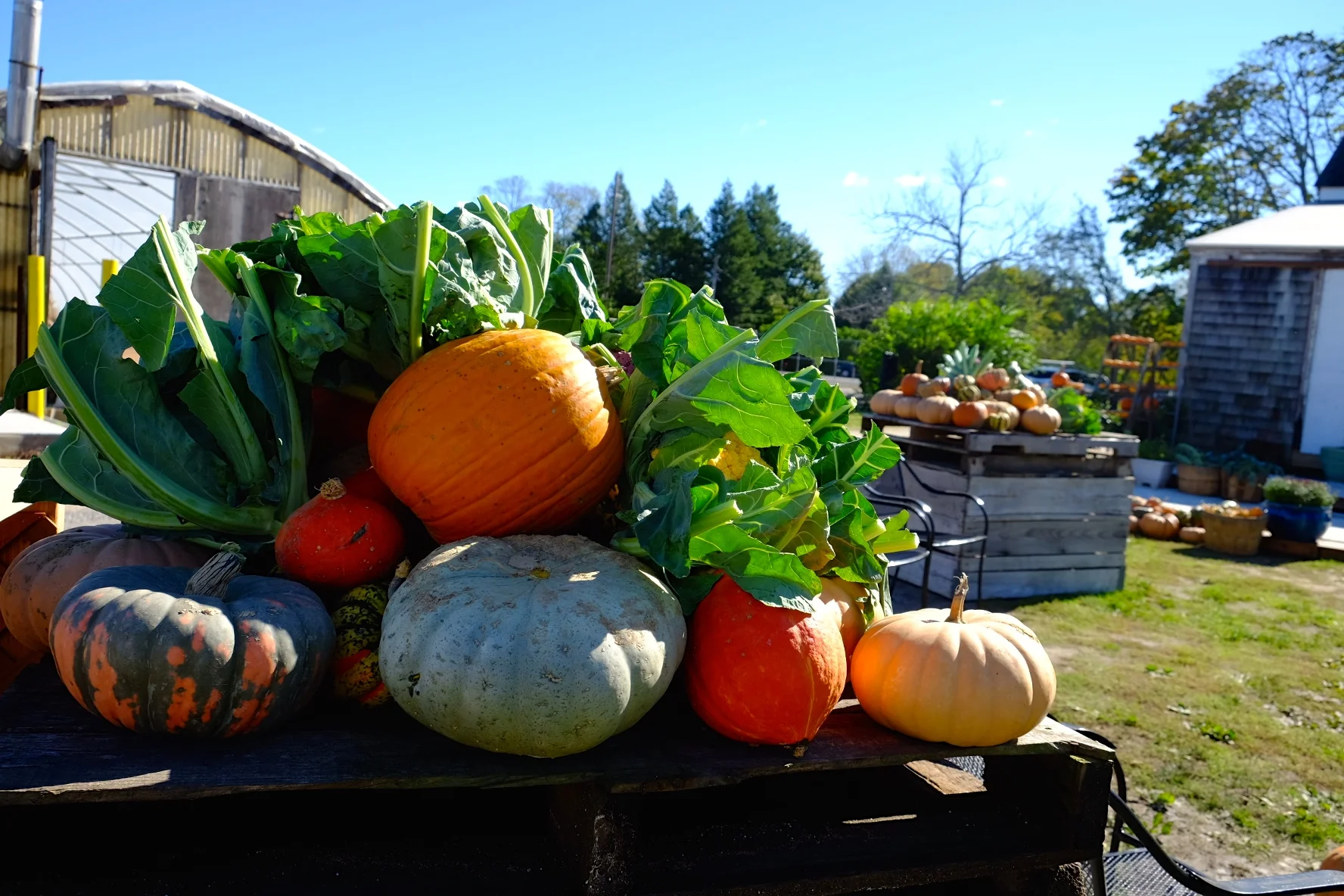


Seems like yesterday I was driving home from the beach (OK, it was yesterday). But then I passed one of my local farm fields filled with pumpkins. So ready-or-not the season has changed. At home I can still enjoy the best of both seasons on the farm and all the goodness from the farm.

Autumn is one of my favorite food seasons. Here's my seasonal spin on the average apple muffin - add pumpkin and crumb. Great to take on-the-go too. Enjoy!

Apple Pumpkin Crumb Muffins
Makes 18 muffins or 9 x 13 coffee cake
chefgeorgehirsch.com | George Hirsch Lifestyle
For the crumb topping:
1/3 cup brown sugar
1/3 cup granulated sugar
1/4 cup flour
3/4 cup oats, not quick cooking
1/4 cup chopped pecans or walnuts
1/2 cup melted butter
Mix all sugars, flour, oats, and nuts. Pour in butter and mix until the topping looks like wet sand. Do not overmix; topping should have a lumpy consistency. Reserve crumb topping and prepare muffin batter.
Preheat oven to 350 degrees F (175 degrees C).
Lightly grease 18 muffin cups or use paper liners.
For the muffins: see recipe below

2 1/2 cups all purpose flour; or 50/50 whole wheat flour
2 cups pure cane granulated sugar
1 1/2 teaspoons cinnamon
3/4 teaspoon ginger
Pinch allspice & fresh grated nutmeg
1 teaspoon vanilla
1 teaspoon baking soda
1/2 teaspoon salt
2 eggs, beaten
1 cup of canned pumpkin puree
1/2 cup applesauce, or vegetable oil
2 cups Green or baking apples, peeled, core and chopped into small pieces
In a large bowl, add flour, sugar, cinnamon, ginger, nutmeg, vanilla, baking soda, and salt. In a separate bowl, mix eggs, pumpkin, and oil. Add pumpkin mixture to flour mixture, stirring just until flour is absorbed. Add chopped apples.
Add batter into prepared muffin cups 3/4 filled. Top each muffin with crumb mixture and bake.
Bake in a preheated oven for 35 to 40 minutes, or until a toothpick inserted into a muffin comes out clean.

AS SEEN ON PUBLIC TELEVISION & CREATE TV- SEASON ONE
FEATURING CHEF GEORGE HIRSCH DEMONSTRATING HIS SAVORY COOKING, BAKING AND GRILLING RECIPES; WITH HIS EXPERT CULINARY TIPS & TECHNIQUES, ALONG WITH VISITS TO HIS INSPIRING HAMPTON LOCATIONS.

LIMITED OFFER, LIMITED EDITION, signed by Chef George.
From the original Grilling TV Series host, 200 Fabulous Recipe—Celebrating the joyous rituals of sharing food at year-round festivities, the star of PBS's Grilling with Chef George Hirsch provides a wealth of recipes and ideas for great party foods, plus advance preparation tips to ease the strain of last minute chores.
Hardcover: 310 pages
Publisher: Hearst Books-HarperCollins; 1St edition (June 12, 1995)
Language: English
ISBN-10: 0688142257
ISBN-13: 978-0688142254
Product Dimensions: 8.1 x 8.1 x 1.3 inches
Shipping Weight: 1.6 pounds

This easy to live with lifestyle plan; with more than 165 of George's easy-to-prepare gourmet recipes, you can lose weight, maintain energy, look better, and enjoy a longer active life, by eating great food!
M.Evans and Company, Inc.
George Starts your year off right!
George Hirsch Living it UP
Recipes for a Healthy Active Life
Product Details
Hardcover: 240 pages; $24.95
Publisher: M. Evans and Company, Inc.; 2000
Language: English
ISBN-10: 0871319241
ISBN-13: 978-0871319241
Product Dimensions: 9 x 6.3 x 1.1 inches
Creative Cooking tips
Fast Easy recipes that allow for an active lifestyle
A 30-Day Menu Plan you can adapt throughout the year
Support and motivation for staying on a healthy eating & exercise routine
Tips for easy food shopping & eating healthy on the run
Each book is personally autographed by George Hirsch.